A practical guide to placing dragonfly stained-glass lamps in bright coastal interiors, with specific advice on...
- There are no more items in your cart
- Shipping Free
- Total NZ$0.00
Working with Coastal Light: Dragonfly Stained-Glass Lamps
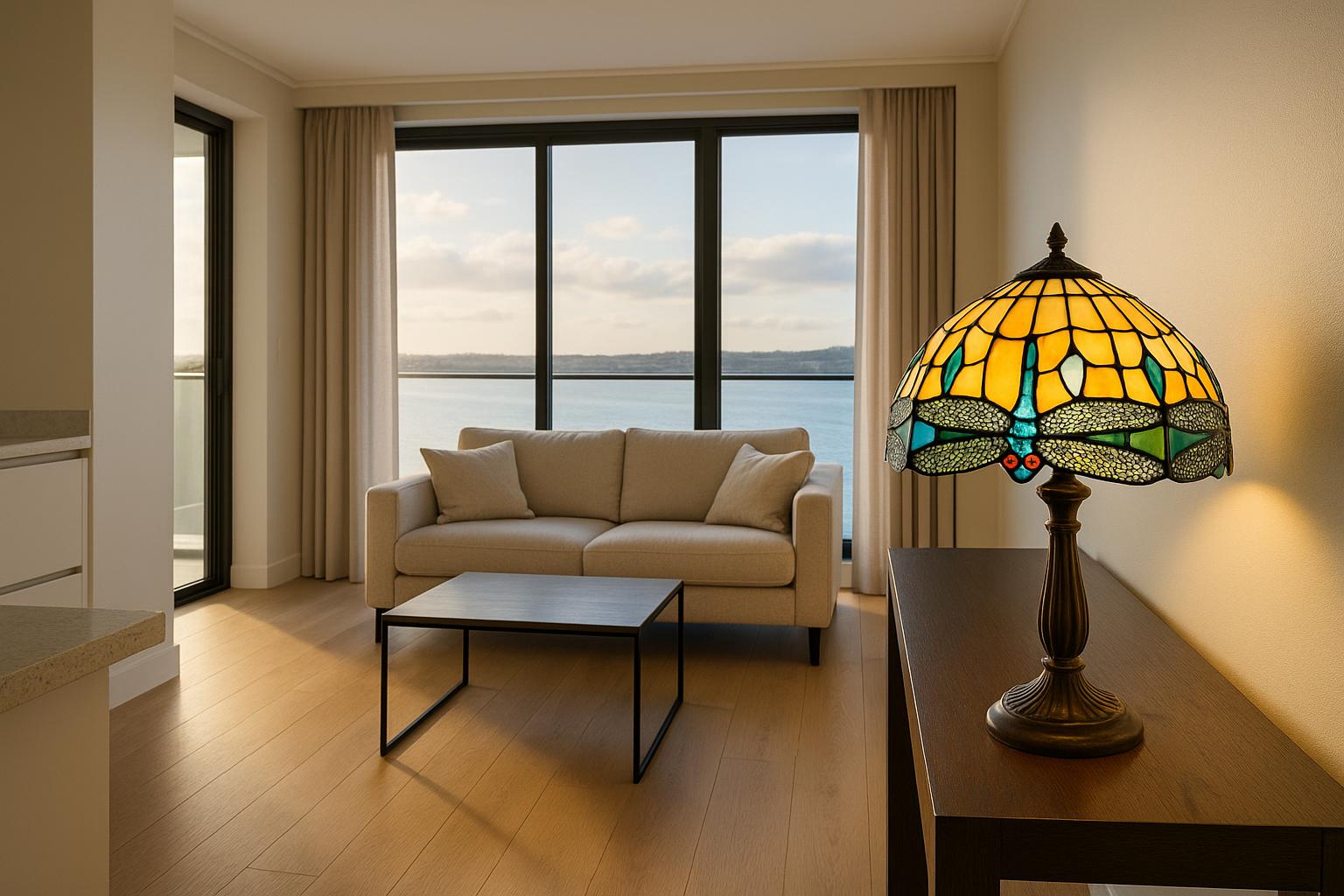
Choosing dragonfly tiffany lamps for coastal homes means looking beyond the motif. Most products sold today are contemporary Tiffany-style lights rather than original Louis Comfort Tiffany artworks, and their effect depends as much on the room as on the shade. Broad windows, pale walls and reflective surfaces can flatten subtle glass colours during the day, then amplify them once the lamp is switched on.
A good choice should work in both conditions. The shade needs enough definition to remain visible against strong coastal daylight, while its evening glow should feel comfortable beside timber, linen, wool and other finishes already in the room. Scale, viewing angle and the job of the light matter more than matching the glass to a sea view.
Assess the room in daylight and after dark
Start with two separate observations. First, view the intended position during the brightest part of the day. North-facing rooms may receive sustained sun, while east- and west-facing glazing can produce sharper morning or afternoon contrast. Note whether the lamp will be seen against a window, a pale wall, cabinetry or a darker internal corner.

Then return after sunset and switch on the lights normally used in the room. A shade that appears restrained when unlit may become the strongest colour source in the space. Check the nearby wall, ceiling, furniture and television screen as well as the lamp itself. Warm glass can enrich pale timber and cream upholstery, while saturated blue or green may leave a cooler tint on an off-white wall.
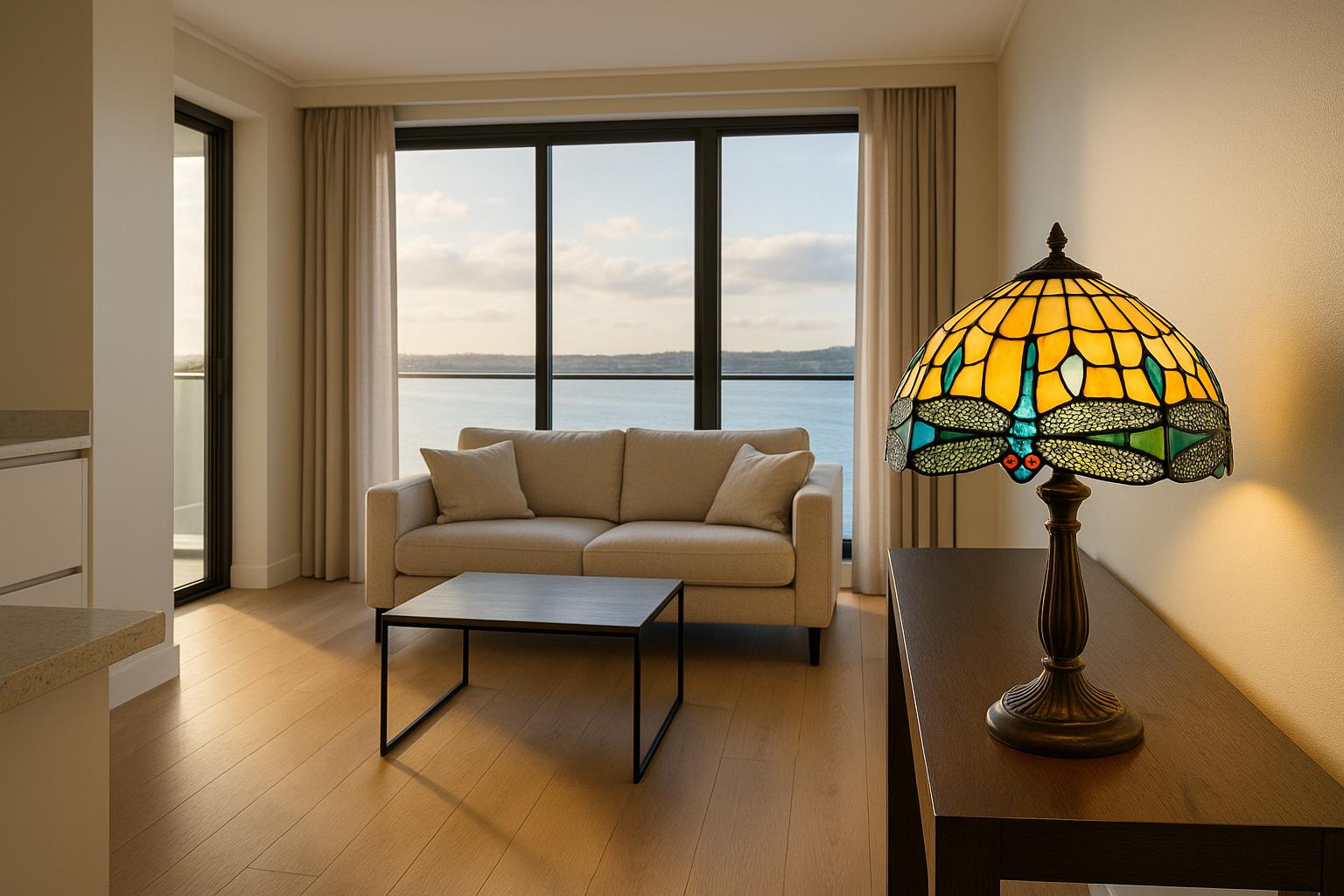
Directly in front of a bright window is often the most difficult position because the shade can read as a silhouette. Moving a table lamp to a side wall, or placing it perpendicular to the glazing, usually gives the glass and dark outlines more presence. In an open-plan lounge, test the view from the kitchen, dining table and main seating area rather than judging it only from beside the lamp.
Use glass colour and dark outlines deliberately
Coastal rooms do not require an all-blue palette. White, sand, warm grey and weathered timber can support amber, teal, green, ruby or cream glass without losing their relaxed character. A small amount of warm colour is often useful in a room that otherwise feels cool under strong daylight.
Blue and green dragonfly wings can connect naturally with coastal vegetation or a distant view, but the background glass determines much of the evening mood. Amber, honey and cream sections generally read warmer after dark. A mixed shade can bridge cool daylight and warm interior finishes more easily than one dominated by a single colour.
Pay attention to the dark framework around the glass. Against large windows and pale walls, these lines help the dragonfly pattern remain legible from across the room. Fine detail is rewarding at bedside distance or in a reading corner; from the far side of an open-plan space, broader wings and a stronger outline tend to register more clearly.
Test shade scale against furniture and glazing
Extensive glazing can make a small decorative lamp look insignificant, but that does not justify putting an oversized shade on a narrow table. Compare the full height, shade diameter and base footprint with the furniture dimensions listed for each product. The base must sit securely, and the tabletop still needs to function.
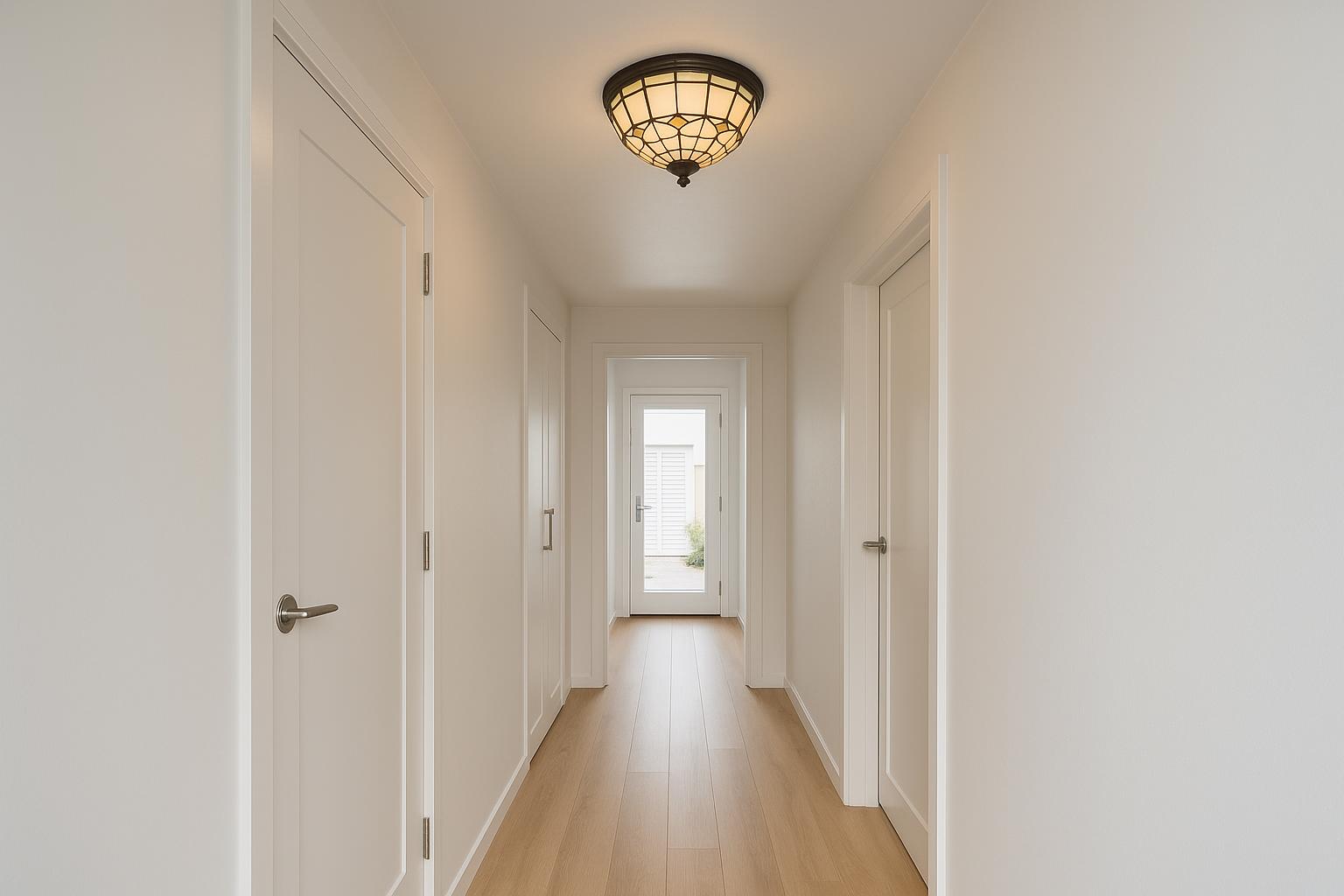
To complement this topic, you can also read The Ceiling-First Test for Choosing a Tiffany-Style Flush Mount.
For a bedside table, mark the proposed base footprint with paper or low-tack tape. Add the book, water glass, phone or other items normally kept there. This quick test reveals whether the lamp will leave usable space and whether its switch will be easy to reach. Also check that the lower edge of the shade will not crowd the bed or feel intrusive when viewed from the pillow.
In a lounge, assess the lamp beside the sofa arm and from the main doorway. A cardboard outline cut to the published overall height and shade width can be useful when shopping online. Set it on the intended table and photograph it from the usual seating position. This is more reliable than judging scale from a tightly cropped catalogue image.
Choose between table lamps and pendant lights
Tiffany table lamps suit rooms that need movable decorative light. They can bring colour to a console, soften a dim end of a lounge or create a welcoming pool of light in an entrance. They are less suitable as the only source for detailed reading unless the product and placement provide appropriate task illumination.

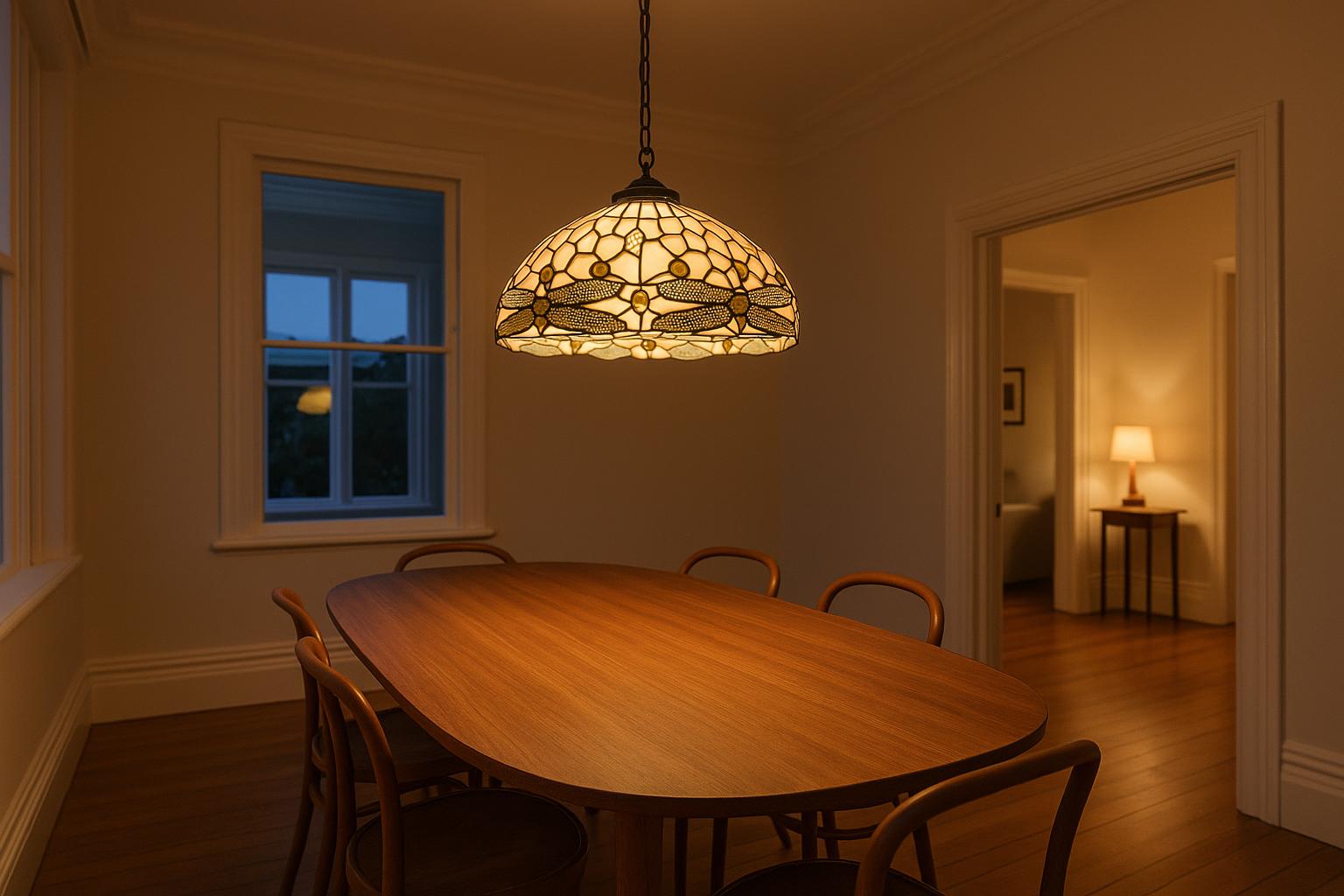
A pendant light has a wider visual role. Over a dining table, it occupies the space between the furniture and ceiling, so it can give a high or lightly vaulted room a clearer centre. Its diameter should relate to the tabletop rather than to the room alone. A fitting that is too narrow can look disconnected; one that extends too far can dominate the table and interrupt views between diners.
Check the pendant from standing and seated positions. The shade should relate comfortably to the table without blocking faces or the view into adjoining spaces. In a coastal home with a sloping ceiling, confirm that the canopy, suspension and fitting are intended for that arrangement before ordering.
Fixed electrical work should be completed by a registered and licensed New Zealand electrician. Follow the product instructions for installation, compatible bulbs and maximum wattage rather than assuming that two visually similar fittings have the same requirements.
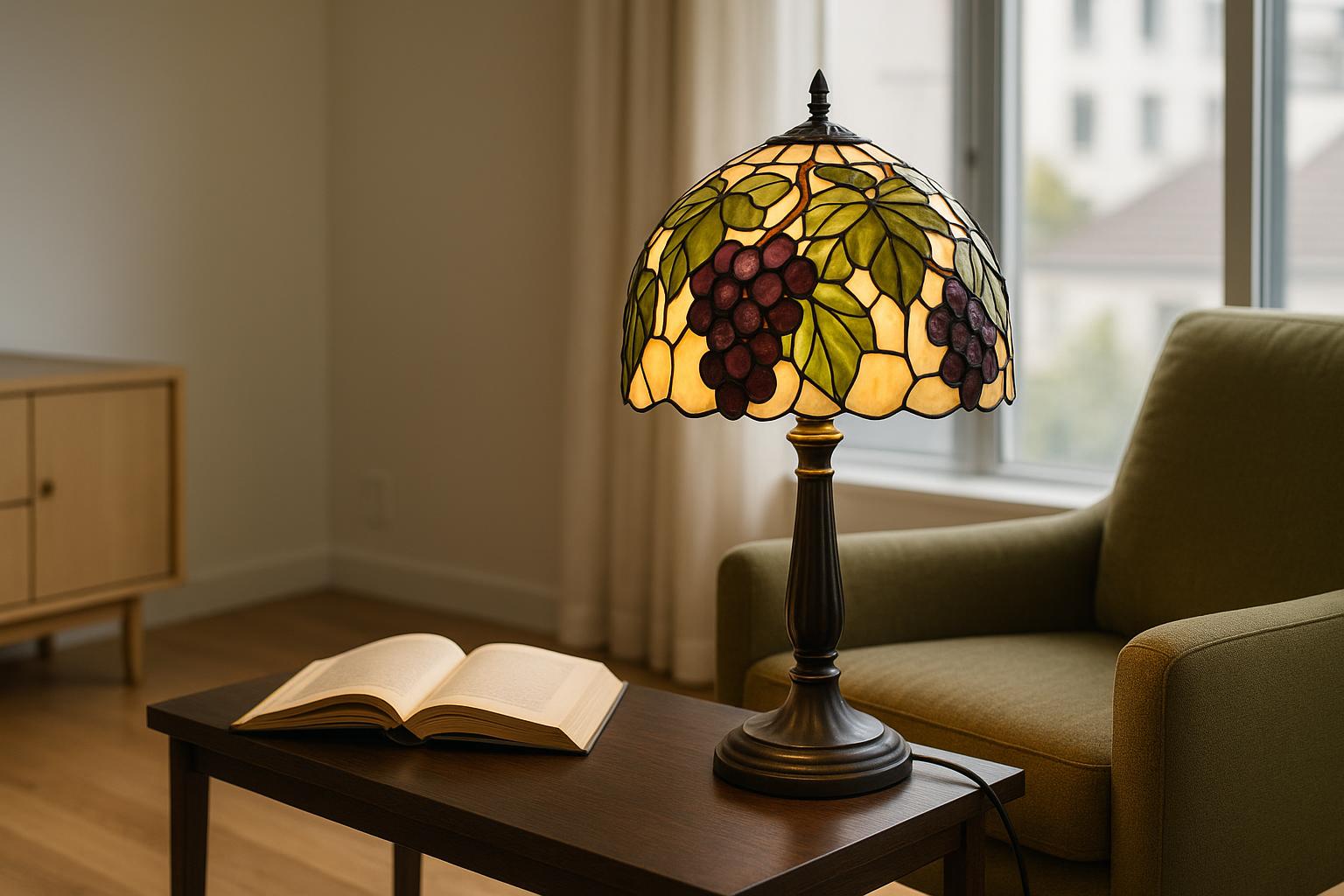
In the same direction, A Room-by-Room Guide to Placing Grape Tiffany-Style Lamps offers useful ideas for choosing home lighting more confidently.
Check glare and seated sightlines
Windows, television screens, glazed artwork and polished kitchen surfaces can all reflect a decorative lamp. Place a temporary light at the proposed location, then sit in each frequently used chair. Look for a direct view of the bulb beneath the shade and for bright reflections that appear on screens after dark.
Changing the position by a short distance can be more effective than choosing a dimmer bulb without considering the rest of the room. A lower side table, a different viewing angle or greater separation from a white wall may reduce distraction while preserving the coloured glow.
Do not ask one dragonfly lamp to illuminate an entire open-plan area. Use ceiling lighting for general coverage, an appropriate reading or desk lamp for close work, and stained-glass lighting for atmosphere and visual emphasis. This gives the decorative shade a clear role without pushing it beyond what its form and placement can comfortably provide.
Keep coastal references understated
A dragonfly shade already supplies a recognisable natural motif. Matching insect ornaments, reeds, shells and overt nautical accessories can make the room feel staged. Let the lamp be the detailed element and keep its immediate surroundings relatively quiet.
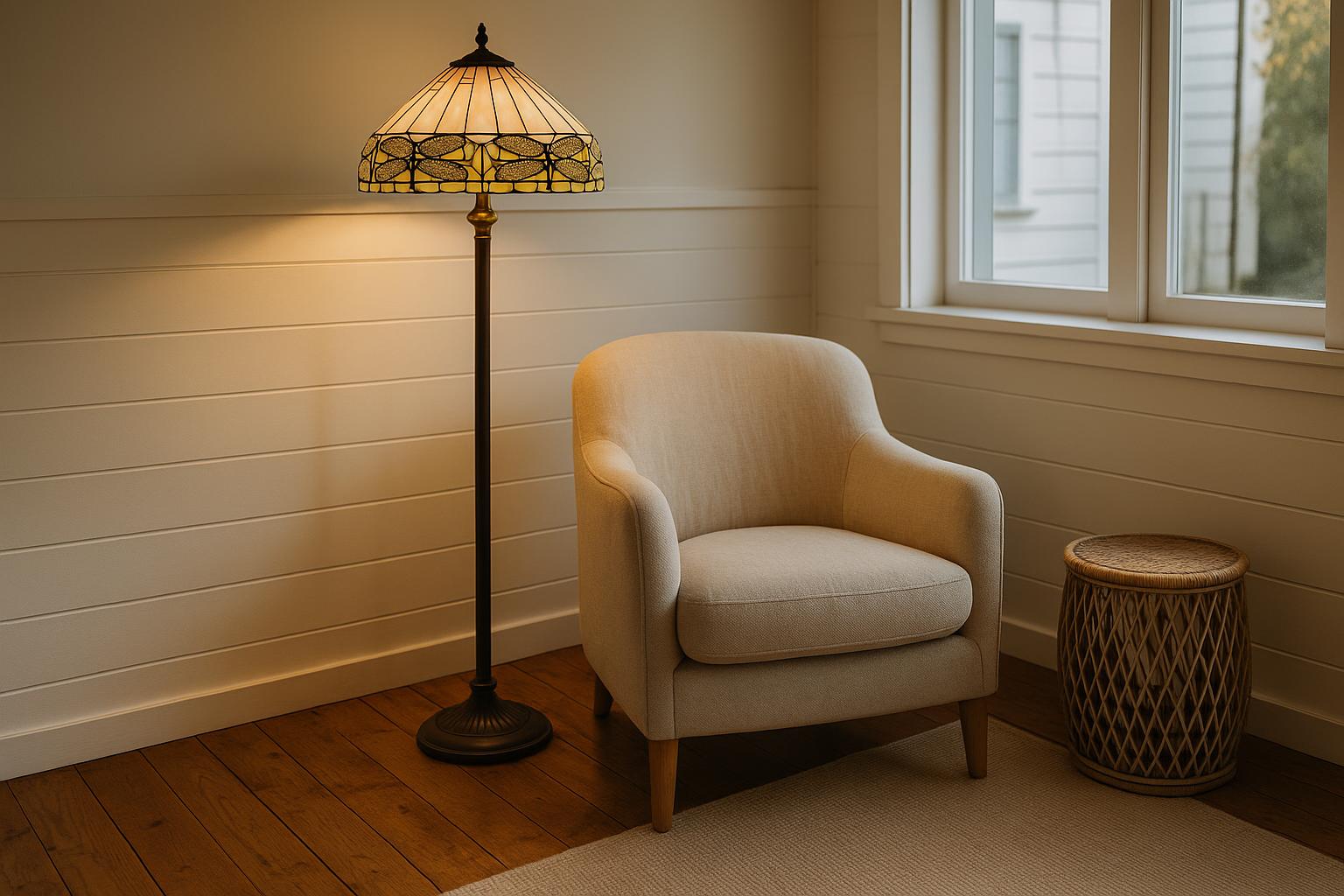
Art Nouveau lighting can sit comfortably with rattan, linen, curved furniture and aged timber, but it also adds warmth to a clean-lined contemporary interior. In an Auckland apartment with extensive glass, dark outlines can provide useful contrast. In a weatherboard bach, the same lamp may connect painted timber walls with newer furnishings. Neither setting needs a literal seaside theme.
Care for indoor stained-glass lighting near the coast
Salt carried through open windows, ordinary household dust and cooking residue can leave a film on a shade. Light, regular dusting is preferable to allowing a heavy build-up that requires more pressure to remove.
Switch the lamp off, unplug it where applicable and wait until it is cool. Support the shade carefully and use a clean, soft, dry cloth. Avoid abrasive pads, force on decorative sections and unapproved household cleaners. For anything beyond gentle dusting, follow the care information supplied with the particular product.
An indoor lamp remains an indoor fitting even when a deck or veranda is roofed. Damp air and wind-driven moisture can reach sheltered outdoor areas, so use a decorative light only in the environment stated in its product information.
Compare a practical final shortlist
Once the location and lighting role are clear, compare candidates using the details that will affect the room in practice:

- Daylight presence: enough contrast for the pattern to remain visible against pale walls or broad glazing.
- Evening character: glass colours that sit comfortably with nearby timber, upholstery and wall colour.
- Physical fit: suitable overall height, shade diameter and base footprint for the available furniture.
- Viewing angle: a comfortable sightline from seating, doorways and adjoining open-plan areas.
- Lighting role: a clear decision between decorative ambience, task support and a pendant focal point.
- Product requirements: installation, bulb and care instructions that suit the proposed location.
With those points recorded, browse the dragonfly Tiffany-style lights and compare the available forms rather than choosing by colour alone. The strongest option will look composed when the room is sunlit, inviting after dark and properly scaled for the way the space is used.