A practical guide to placing dragonfly stained-glass lamps in bright coastal interiors, with specific advice on...
- There are no more items in your cart
- Shipping Free
- Total NZ$0.00
A Room-by-Room Guide to Placing Grape Tiffany-Style Lamps
Start with the lighting job
Before comparing handcrafted grape tiffany lamps, decide what the room actually needs. A lamp beside a lounge chair has a different job from a pendant over a dining table, even when both use the same grape-and-vine motif. One may provide a pool of light and a decorative focus at seated eye level; the other may help define a dining area within an open-plan room.

Grape designs have considerable visual weight. Rounded fruit, broad leaves, curling stems and dark leading create more movement than a plain fabric lampshade. Rich plum, burgundy and amber glass tends to feel substantial, while a design with more cream background glass and open spacing may sit more lightly in the room. Treat the shade as part of the furnishing scheme, not as an isolated ornament.
Write down the main purpose before choosing a fixture: atmosphere, reading support, spatial definition or a focal point. This prevents a striking shade from being placed where it cannot do the required job.
Read the shade switched off and on
Grape stained glass lamps have two distinct appearances. When switched off, reflected daylight reveals the surface texture, leading and deeper colours of the glass. When illuminated, amber and red pieces usually become more prominent, while green and blue sections can appear softer. The exact result depends on the individual shade, bulb and room.
This change is especially noticeable in New Zealand homes with extensive glazing. Strong summer daylight can make a shade near a large window appear paler or less dominant. Low winter sun may pick out textured glass and warmer tones, while a darker internal hallway can make the unlit shade look dense and graphic.
Do not place stained glass in harsh direct sun merely to brighten it. Instead, assess where the lamp will be seen during normal use. A position receiving indirect or reflected daylight will often show the unlit glass without creating excessive glare around it. Also view the shade from the sofa, doorway or dining chair rather than judging it only at close range.
Consider the background. A pale wall gives dark leading a clear outline and allows the evening glow to register. A deep green or charcoal wall can create a cosy effect, but foliage and dark outlines may recede when the lamp is off. Coloured glass close to a wall may also produce a subtle tint after dark, which can be distracting beside artwork where colour accuracy matters.
Choose the right fixture type
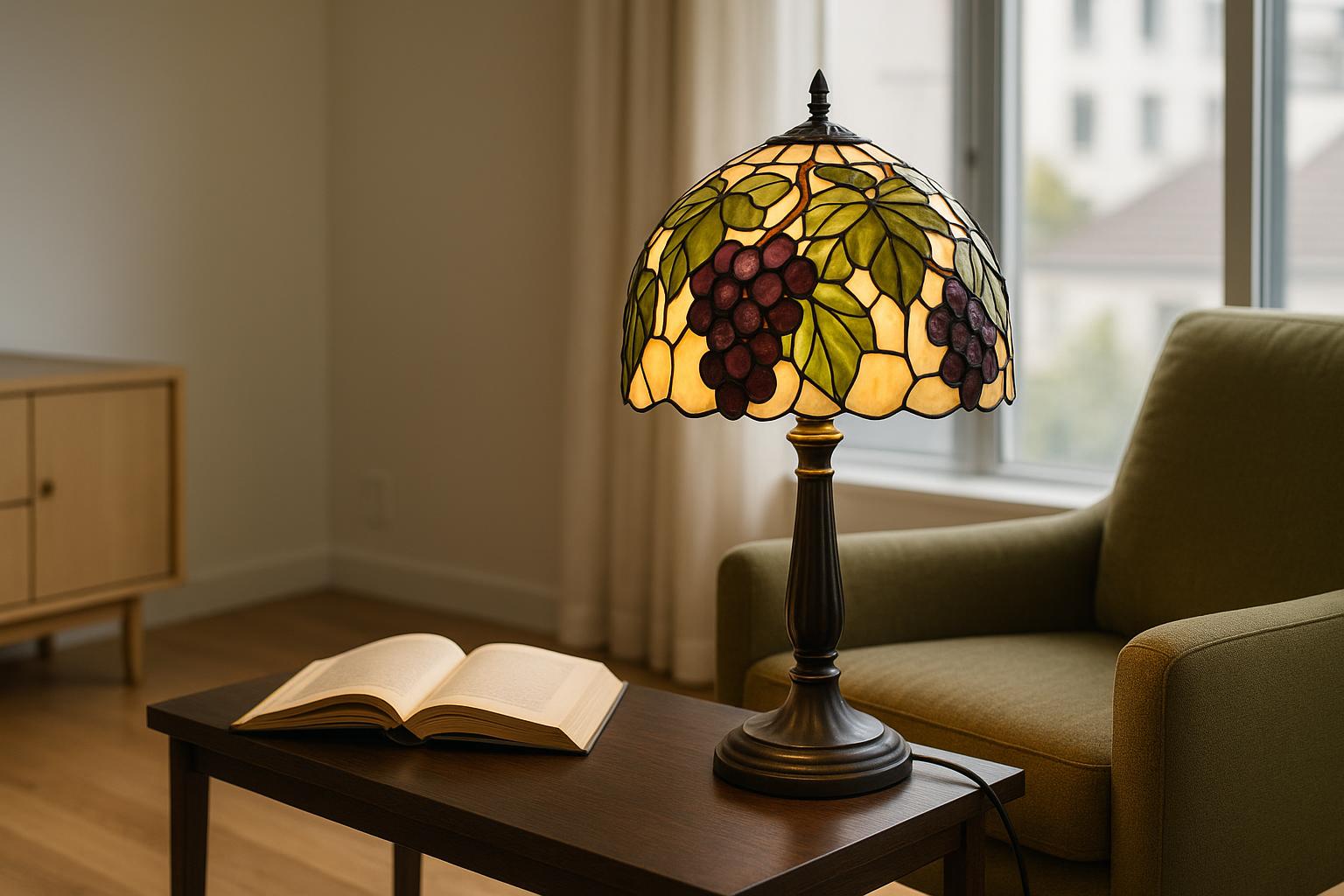
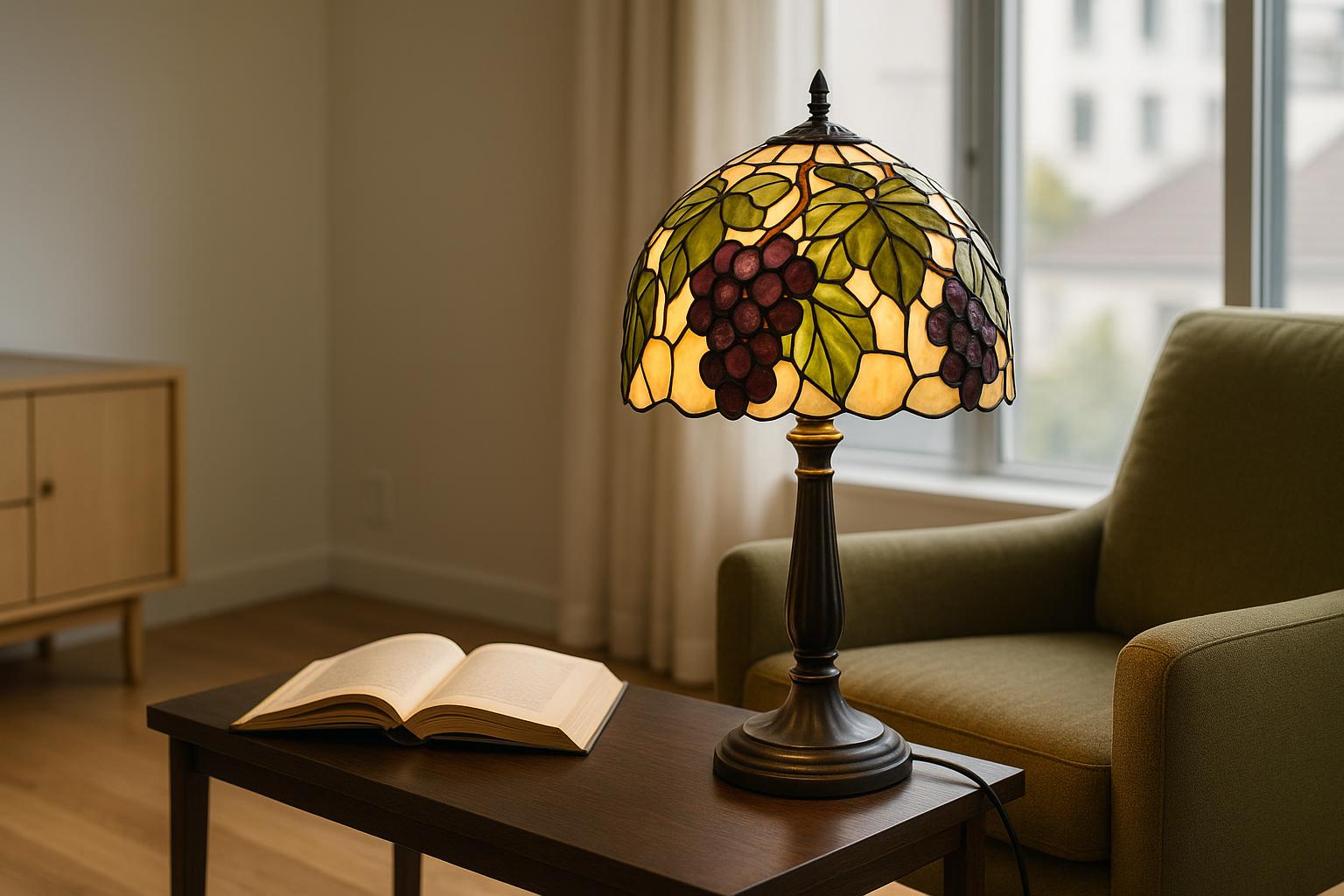
Tiffany table lamps bring the pattern close to eye level. They suit bedside tables, entrance consoles, desk corners and lounge side tables where there is enough space around the base. They are also easier to reposition as furniture changes, although access to a suitable power point and safe cord placement still matter.
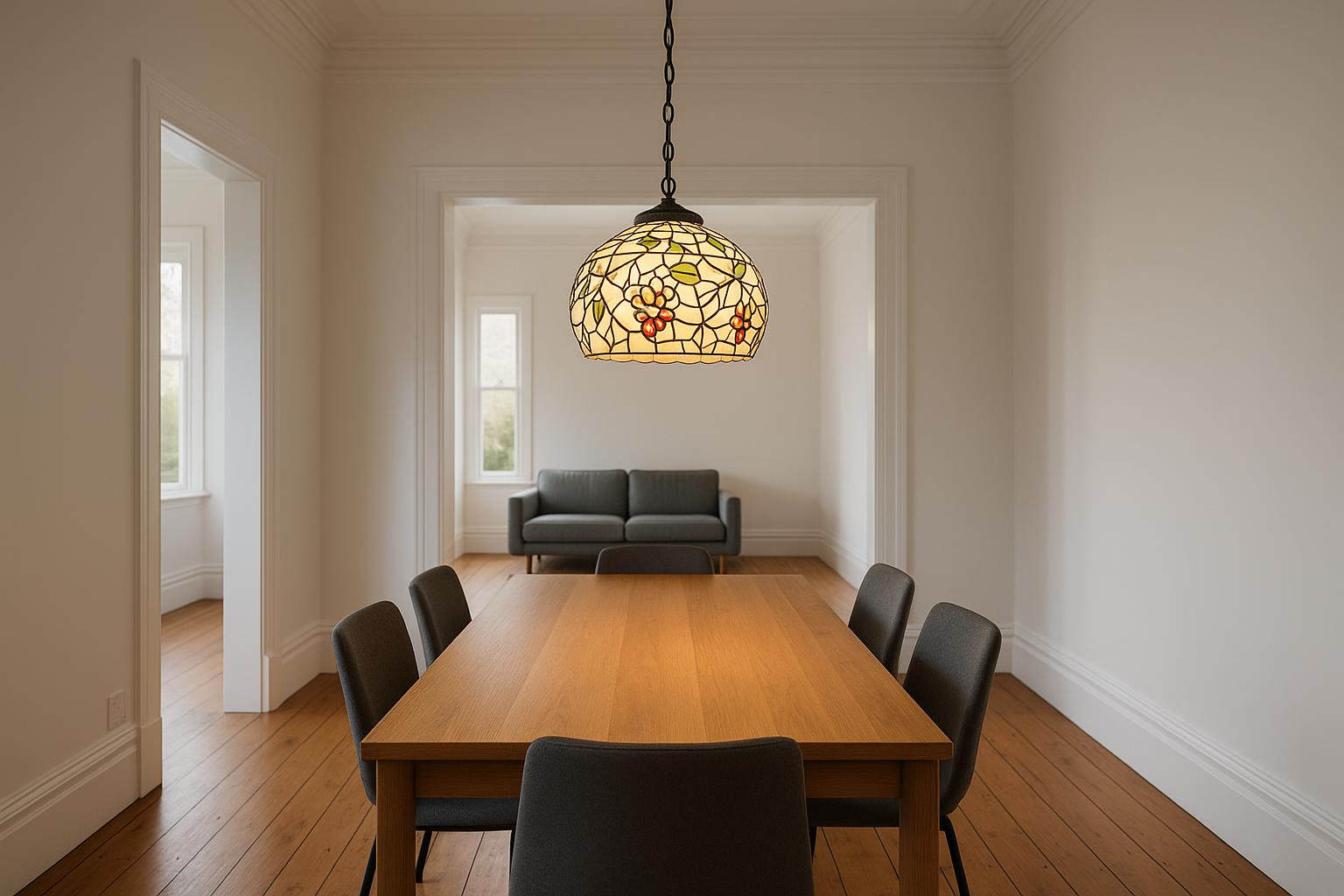
Grape pendant lights make a broader architectural statement. Over a dining table, the fruit and vine imagery can feel natural without requiring matching grape decorations elsewhere. In an open-plan renovation, a pendant can visually anchor the dining zone while leaving the floor clear.

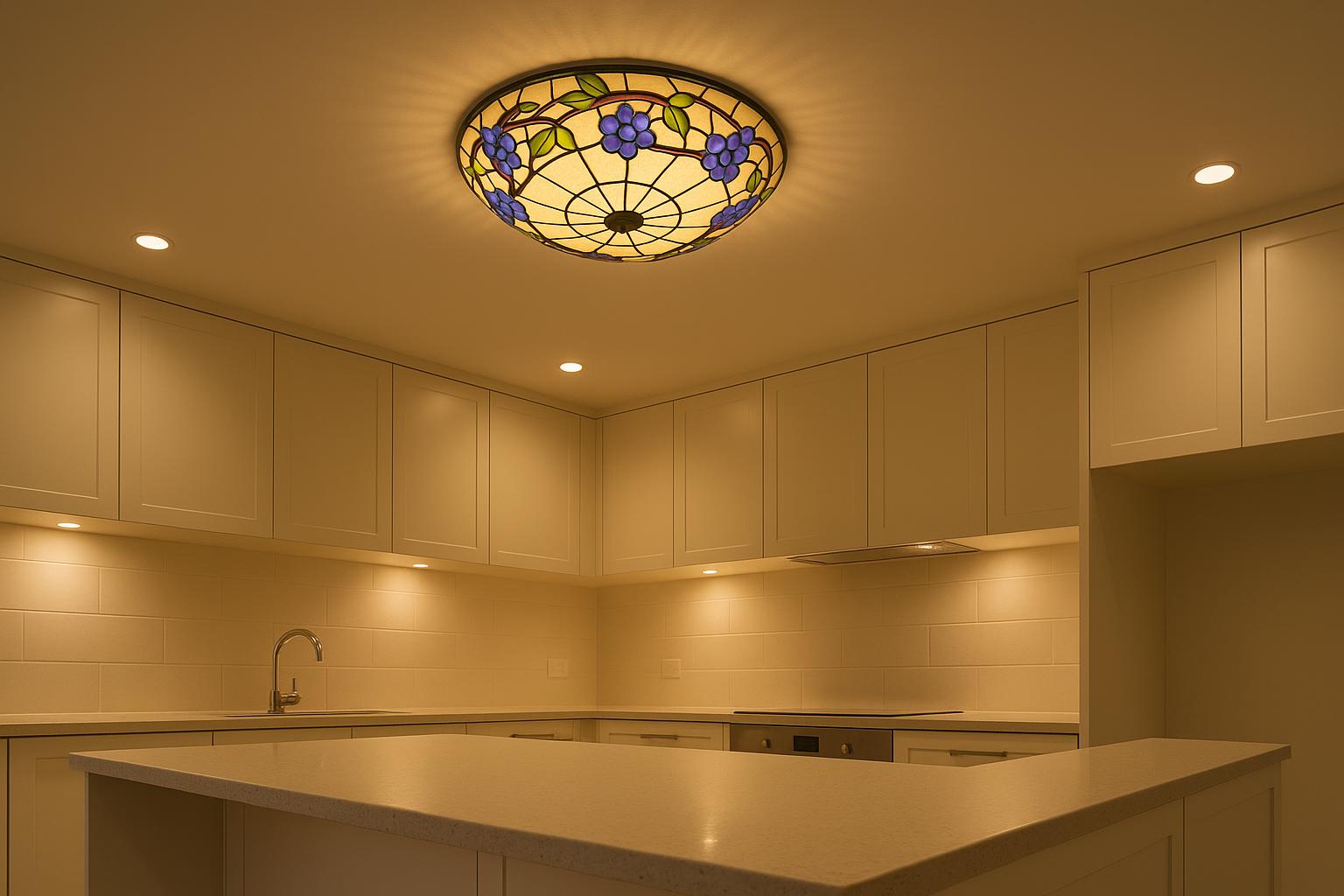
Ceiling volume matters as much as decorating style. A high-ceilinged villa or heritage home may accommodate a deeper suspended shade. A compact apartment hallway will usually need a shallower fitting that preserves headroom. For low or busy circulation areas, a flush mount may be more practical than a pendant. Check the dimensions and suspension details of the specific product rather than assuming all shades with a similar motif hang in the same way.
Measure for a table lamp
Measure the furniture in centimetres before ordering. Record the tabletop width and depth, then note how much usable space must remain for a book, drinking glass, keys or other everyday items. A lampshade that fits within the tabletop can still feel crowded if its edge sits close to everything around it.
Height should be assessed from the position in which the lamp will be used. Beside a bed, check the view while reclining as well as sitting upright. The shade should help shield the brightest part of the bulb. Next to a lounge chair, consider whether light will reach the page or handwork without placing the bulb directly in the user’s line of sight.
The base also affects perceived scale. Detailed vine pattern lighting often looks more settled when the base has enough visual presence to support the shade. That does not necessarily mean choosing a larger lamp. In an Auckland apartment, a modest lamp can have greater impact when the bedside table and surrounding wall are kept uncluttered.
- Measure the surface: note its width, depth and the clear area required for daily use.
- Check the viewpoint: sit or recline where the lamp will normally be seen.
- Trace the footprint: use paper to represent the base and nearby objects.
- Review the cord route: avoid creating a trip or snagging hazard across a walkway.
Mock up a pendant before installation
A paper or cardboard template is a useful way to test pendant diameter. Cut or mark the proposed width, suspend it temporarily in the intended position and inspect it from adjoining rooms. This reveals whether the fitting dominates a small table, disappears over a long kitchen island or blocks an important sightline.
Keep a dining pendant visually connected to the table rather than floating near the ceiling. At the same time, preserve comfortable views between seated people and across the room. Because shades, suspension systems, ceiling heights and household needs vary, use the product instructions and an on-site assessment rather than relying on a universal hanging measurement.
Several smaller pendants can create rhythm over an elongated surface, but only if the product design, ceiling layout and electrical plan support multiple fittings. Repeating an intricate fruit motif too many times may also make a compact kitchen feel busy. Test the full arrangement on paper before committing.
Sloping and vaulted ceilings require particular care because the canopy and suspension hardware may not suit every angle. Fixed electrical work should be completed by a registered and licensed New Zealand electrician, who can assess the proposed location and install the fitting in accordance with its instructions.
Balance the glass with the room
Fruit motif lamps do not require purple cushions, grape ornaments or matching patterned curtains. Repeating every colour in the shade can make a room feel themed. A quieter approach is to pick up one supporting tone through an olive chair, honeyed timber, an amber ceramic piece or a muted green textile.
Pattern scale matters too. Against detailed wallpaper, choose a shade with a strong, readable composition rather than many tiny competing elements. In a Christchurch new build with pale walls and straight architectural lines, grape-patterned glass can supply warmth and curvature without turning the whole interior into a heritage scheme.
Timber works naturally with the botanical motif, but different finishes alter the effect. Light or honeyed timber reinforces amber glass and keeps the result relaxed. Smoked or dark brown timber creates a more formal background for burgundy fruit and dark leading. Metal, stone and painted furniture can also work; the aim is balance rather than historical imitation.
Add practical lighting layers
Stained glass filters and colours light, so a decorative shade should not be expected to illuminate every task. A grape lamp can make a corner inviting while separate fittings provide the clearer, more even light needed for cooking, paperwork, cleaning or safe movement.

- Ambient lighting: general ceiling or wall light for comfortable movement through the room.
- Task lighting: focused light for reading, food preparation or desk work.
- Decorative lighting: the glow, pattern and visual emphasis created by the stained-glass fitting.
In a coastal lounge, for example, a grape table lamp can sit beside a reading chair while an understated ceiling light supports general use. Over a kitchen island, a stained-glass pendant may define the zone, but dedicated work lighting still needs to reach the benchtop without troublesome shadows.
Check the product information for the required bulb cap, permitted bulb type, maximum wattage and any control compatibility. Do not assume that a bulb or dimmer used with another lamp will suit the new fitting.
Make a measured shortlist
Compare each option against the measurements and purpose you established at the start. Look at the overall dimensions, shade depth, base footprint or suspension details, and consider how the lamp will appear from the room’s usual entrances and seats. If product photographs show both illuminated and unlit views, compare them carefully; the lamp will spend part of each day switched off.
Small differences within a detailed stained-glass pattern contribute to its character, but the overall palette and proportions still need to work with the room. A successful choice should leave furniture usable, maintain sightlines and support the wider lighting plan.
To compare table, pendant and coordinated designs, browse the Grape Tiffany Lamps collection. Shortlist by fixture type and dimensions first, then choose the colour balance and motif you would be comfortable seeing in both daylight and evening light.