
The best height balances light on the table, clear conversation sightlines and shielding of the bulbs.
Start with the problem, not the product photograph
A few centimetres can expose a bulb or put glass in a door path. For Pendant height above a dining table, measure the complete three-dimensional envelope.
Photograph the proposed position straight on and from the side. Record the full dimensions, lampholder, bulb, connection method and the main task. A close product image rarely shows room scale, door movement or the angle from which a bare bulb becomes visible.
Three distinct decisions
1. Decide the job before the style
Use the tabletop as the reference and adjust for shade opening, tallest regular user, ceiling height and chain limits.
Keep this evidence: write the main task and the one constraint that could rule the fitting out.
2. Measure the real fitting envelope
Measure table-to-shade distance, shade-to-ceiling distance and the eye-to-eye line between seated people.
Keep this evidence: record every dimension from one named reference point and photograph the tape measure in place.
3. Test the result from normal positions
Test three heights with the exact-diameter template and keep the lowest position that preserves sight and hides bare bulbs.
Keep this evidence: repeat the check by day and after dark, using the bulb and furniture layout you expect to keep.
Worked calculation
Pendant bottom height
B = F + C
Variables: B is the shade-bottom height above floor, F is tabletop height and C is chosen clearance above the table.
Example: With a 750 mm table and a tested 780 mm clearance, B = 750 + 780 = 1530 mm above floor. Confirm seated sightlines before fixing.
The calculation gives a planning check, not an installation approval. Confirm the maker’s dimensions, use a full-size mock-up and let the appropriately qualified person decide structural and fixed-wiring details.
A real TiffanyLight.co.nz product as the worked case
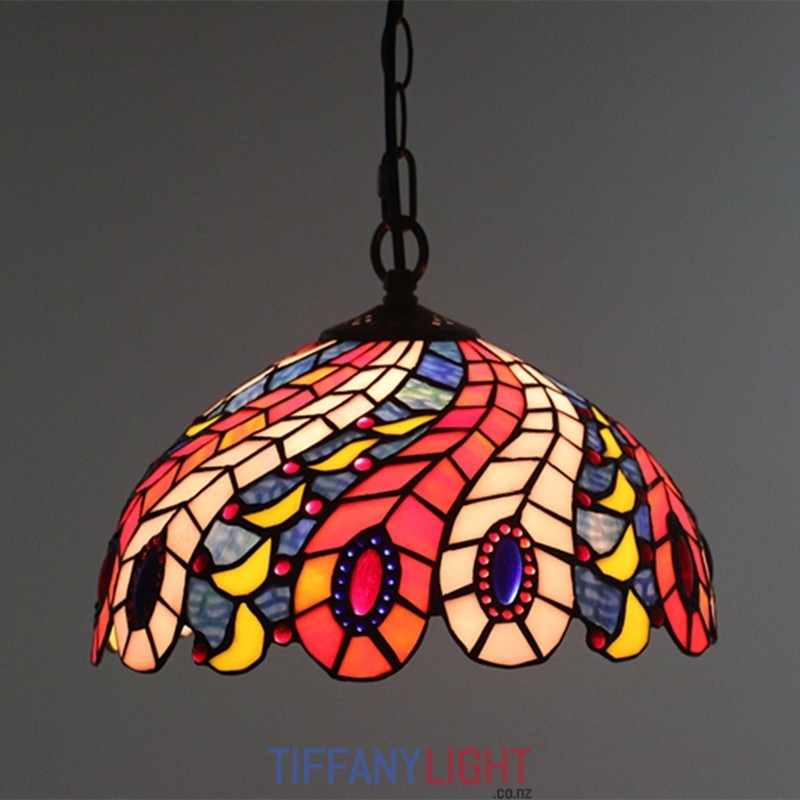
30 cm European stained-glass pendant
A medium pendant used for canopy, height, table alignment and total-cost examples.
This model demonstrates the method; it is not an automatic recommendation. Draw its complete dimensions, verify the current electrical specification and test the proposed light in the real room. Product details can change, so check the live page before buying.
Confirm on the product page: total dimensions, weight, voltage and connection, lampholder, maximum wattage, included parts and installation conditions.
Practical New Zealand home scenario
Build the full shade diameter in lightweight card and place it at the stated height. Photograph it from the doorway, seat and closest route. Add a realistic margin; a choice that works only to the millimetre will fail when furniture moves or installation tolerances appear.
Common mistakes
- Confusing shade diameter with total fitting width.
- Forgetting doors, heads, curtains, cupboards and cleaning access.
- Rounding inch dimensions before drawing the template.
Final checklist
- All dimensions use the same reference point.
- The complete volume is mocked up at 1:1.
- Doors and walking routes remain clear.
- Seated and standing views are tested.
- Safe service access exists.
Record sheet: model, complete dimensions, total weight, voltage and connection, lampholder, chosen LED, position, mock-up photograph and check date. The current product information and maker’s instructions take priority over general guidance.